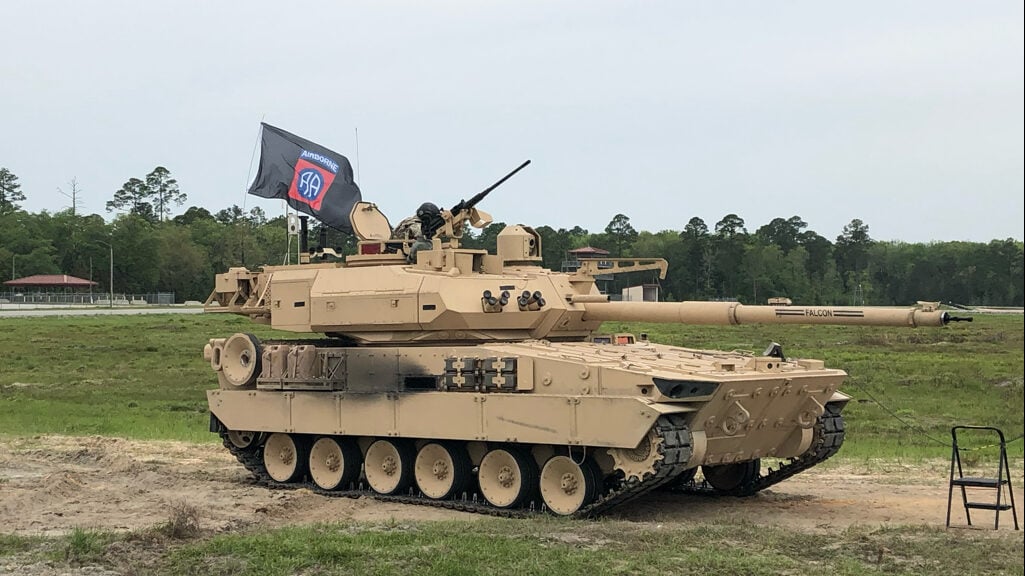
M-10 Booker MPF “light tank”

All Hi-Tech Developments for the Military and Civilian Sectors
Post Reply
User avatar
OSCSSW
Posts: 763
Joined: Fri Nov 18, 2022 5:56 pm
Location: CivLant

M-10 Booker MPF “light tank”

Post by OSCSSW »

This old sailor just can't get his 20th century Neanderthal single malt marinated mind around WHY the Army Brass (early Happy Birthday) is deploying a Light Tank! I'd thought with Main Battle Tank KILLING Helo, fixed wing aircraft, Man portable Anti-Tank guided missiles and God knows what kind of direct energy weapons in development the day of the Light Tank was long over but I guess I'm wrong.
Image

Someone want to tell my why the above is not a death trap for it's crews? :?

WOULD YOU LIKE TO KNOW MORE?

General Dynamics wins $1.14 billion Mobile Protected Firepower contract
The Mobile Protected Firepower program, a light tank for infantry brigades, is one of the Army's top modernization priorities and the service's first new design vehicle in 40 years.
By Andrew Eversden June 28, 2022

WASHINGTON: The US Army is awarding a $1.14 billion contract to General Dynamics Land Systems for its Mobile Protected Firepower program, the Army announced today, marking a significant milestone for one of the Army’s top 35 modernization priorities.

The Mobile Protected Firepower vehicle, which will be the Army’s first new designed vehicle in over 40 years, will provide the Army’s infantry brigades with a light tank for directing firepower against enemy positions and bunkers on the battlefield. GDLS beat out BAE Systems.

“This is our first big major platform that’s going from prototyping to production,” Doug Bush, the assistant secretary of the Army for acquisition, logistics and technology, told reporters on a media roundtable ahead of the announcement.

Under the contract, GDLS will be on the hook for 96 vehicles. The Army will buy 26 MPFs in the first lot, according to Brig. Gen. Glenn Dean, program executive officer for ground combat systems.

Maj. Gen. Ross Coffman, director of the Next Generation Combat Vehicle Cross-Functional Team, called the milestone a “big day” and an “additive capability” that fills a current gap for infantry units.

“The answer is in the name. It’ll gives the light infantry units a mobile, protected firepower that … can remove impediments on the battlefield to ensure our infantry women and men make it to the objective,” Coffman told reporters.

The Mobile Protected Firepower program is part of the Army’s Next-Generation Combat Vehicle portfolio, which is developing future ground vehicles as part of the services’ broader, multi-billion modernization effort that includes the Optionally Manned Fighting Vehicle.

The Army’s stated acquisition objective for the program is 504 vehicles. The first production vehicle will be delivered in “just under” 19 months, Dean said, a timetable that roughly hits around December 2023. That timeline is driven in part by the time it takes to get long-lead time parts, Dean said.

Moving into production, the Army and GDLS will have to be diligent to avoid supply chain issues as production ramps up. Dean said the program was already experiencing “challenges” in the supply base.

“We are seeing challenges in the supply base right now both in cost and availability [of] materials, as well as competition for other components, particularly in the electronic space where electronic chips are in big demand,” Dean said, adding the Army had “some comfort” because the proposals had “reasonable control” over their supply chain.

The first unit equipped milestone is on schedule for the fourth quarter of FY25, the Army officials said, with the initial requirement is one battalion of vehicles. Dean said one battalion is 42 vehicles.

The Army plans to field four battalions by 2030 with the “bulk” of the procurement fielded by 2035, Dean said. He added that the program had a total lifecycle cost of $17 billion across a 30-year lifespan.

The Army has had serious trouble with acquisition processes for new platforms in the past, including OMFV, currently on its third attempt to replace the Bradley Fighting Vehicle. Overall, Army leaders told reporters that they were satisfied with how the competition shook out.

“This achieved everything we were intending to. We had two vendors. They were competitive,” Dean said.

“We are honored that the Army has chosen our offering for this important program,” said Gordon Stein, General Dynamics Land Systems vice president and general manager for U.S. operations. “Our team worked tirelessly to deliver our prototypes in time to support the Army’s evaluation plan, and we incorporated Soldier feedback into the final design.”

In a statement, a BAE spokesperson said the company would use lessons learned from MPF to future efforts.

“We believe BAE Systems’ Mobile Protected Firepower solution would provide the capability the Infantry Brigade Combat Team needs,” a spokesperson said. “While we were not chosen to move forward in the MPF competition, we will take the innovation and lessons learned from our solution with us and apply it to future modernization efforts.”

BAE said it hadn’t made a decision regarding protests.

The Army’s fiscal 2023 budget request asked Congress for $356.7 million in procurement funds for 28 light tanks.

BAE and General Dynamics Land Systems were chosen by the Army in 2018 through a Middle-Tier Acquisition rapid prototyping contract worth up to $376 million each, with both contractors required to build 12 prototypes.

A soldier vehicle assessment began in January 2021 at Fort Bragg and ran for a year. BAE reportedly struggled to get its prototypes to North Carolina on time, but eventually its vehicle did make it. Still, Janes reported in March that BAE Systems had been eliminated from the competition.

Bush said that the Army would formally name the vehicles around the Association of the US Army conference in October.

WOULD YOU LIKE TO KNOW EVEN MORE (this is worth reading about two very brave men)

The new tracked combat vehicle Mobile Protected Firepower (MPF) “light tank” now carries the name of Private Robert Booker (an infantryman) who was killed in action during World War II on April 9, 1943, and Staff Sgt. Stevon Booker (a tanker) who was killed in action on April 5, 2003, during the Thunder Run into Baghdad, head of Army acquisition Doug Bush told reporters on Thursday.

Image
Staff Sgt. Stevon Booker
Distinguished Service Cross
AWARDED FOR ACTIONS
DURING Global War on Terror
Service: Army
Battalion: 1st Battalion
Division: 3d Infantry Division
GENERAL ORDERS:

CITATION:
The President of the United States of America, authorized by Act of Congress July 9, 1918, takes pride in presenting the Distinguished Service Cross (Posthumously) to Staff Sergeant Stevon A. Booker, United States Army, for extraordinary heroism while engaged in an action against an enemy of the United States while serving as a Tank Commander with Company A, 1st Battalion, 64th Armored Regiment, 2d Brigade Combat Team, 3rd Infantry Division (Mechanized) on 5 April 2003 in Iraq. On this date, Staff Sergeant Booker's platoon led a task force in a movement to contact along Highway 8 towards Baghdad International Airport. Two kilometers after the line of departure, the platoon came under heavy small arms and rocket propelled grenade fire from an enemy element. He immediately communicated the situation to his chain of command, encouraged his crew, and returned fire with his tank mounted machinegun. When both his and his crew's machineguns malfunctioned, Staff Sergeant Booker, with total disregard for his personal safety, exposed himself by lying in a prone position on top of the tank's turret and accurately engaged the enemy forces with his personal weapon. While exposed he effectively protected his platoon's flank and delivered accurate information to his command during a critical and vulnerable point of the battle. Staff Sergeant Booker's fearless attitude and excitement over the communications network inspired his platoon to continue the attack and assured them and leadership that they would defeat the enemy and reach their objective safely. As he remained exposed, Staff Sergeant Booker identified an enemy troop carrier which was attempting to bypass his tank, but within seconds engaged the enemy vehicle and destroyed it prior to the enemy troops dismounting. Along the eight kilometer route he remained exposed and continued to engage the enemy with accurate rifle fire until he was mortally wounded. Staff Sergeant Booker's actions are in keeping with the highest traditions of the military service and reflect great credit upon himself, the 3d Infantry Division (Mechanized), and the United States Army.
Image
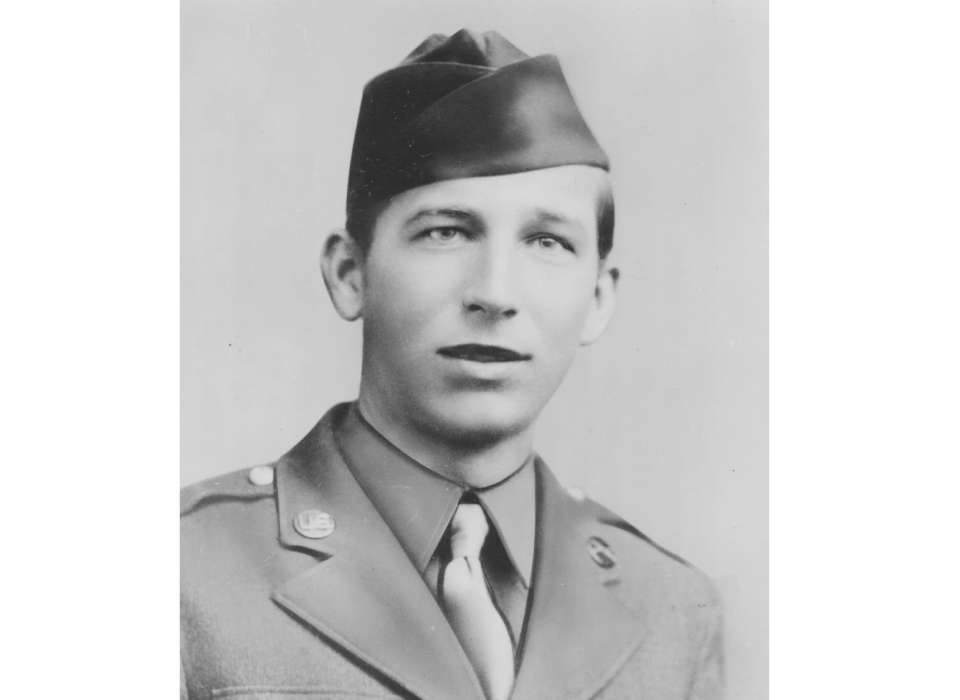
Medal of Honor: Robert D. Booker, Private, US Army
For his courageous actions, Booker was posthumously awarded the Medal of Honor on April 25, 1944, along with the Purple Heart.

His Medal of Honor CITATION
For conspicuous gallantry and intrepidity at the risk of life above and beyond the call of duty in action. On 9 April 1943 in the vicinity of Fondouk, Tunisia, Pvt. Booker, while engaged in action against the enemy, carried a light machine gun and a box of ammunition over 200 yards of open ground. He continued to advance despite the fact that two enemy machine guns and several mortars were using him as an individual target. Although enemy artillery also began to register on him, upon reaching his objective he immediately commenced firing. After being wounded he silenced one enemy machine gun and was beginning to fire at the other when he received a second mortal wound. With his last remaining strength, he encouraged the members of his squad and directed their fire. Pvt. Booker acted without regard for his own safety. His initiative and courage against insurmountable odds are an example of the highest standard of self-sacrifice and fidelity to duty.

Booker was 22 years old at the time of his death. He is buried at Rose Hill Cemetery in his hometown of Callaway, Nebraska.
Robert D. Booker was born on July 11, 1920, in Callaway, Nebraska, where he joined the US Army in June 1942. After basic training, Private Booker was assigned to the 133rd Infantry Regiment, 34th Infantry Division, and sent to Africa.

FWIW, the IMNSHO, the brass got something right in naming a tank after these two outstanding US Army enlisted men.
The USA is back and you aint seen nothin yet :twisted: :twisted: :twisted:
Poohbah
Posts: 3467
Joined: Thu Nov 17, 2022 2:08 pm
Location: San Diego, CA

Re: M-10 Booker MPF “light tank”

Post by Poohbah »

For airborne units, it's better than nothing.
Nik_SpeakerToCats
Posts: 2203
Joined: Sat Dec 10, 2022 10:56 am

Re: M-10 Booker MPF “light tank”

Post by Nik_SpeakerToCats »

Seems 'un-dressed': where is the near-obligatory brick-work cladding of 'reactive armour' ??
If you cannot see the wood for the trees, deploy LIDAR.
Belushi TD
Posts: 1665
Joined: Thu Nov 17, 2022 11:20 am

Re: M-10 Booker MPF “light tank”

Post by Belushi TD »

If its supposed to be an airmobile vehicle, the extra blocks may make it overweight for some kind of deployment means so maybe its not supposed to have them.

It also may be that the particular version shown is not equipped with them because "Training" or something.

Of course, I know nothing about this particular vehicle except what's in the article, and that understanding is likely to be ... imperfect at best, as I'm running on 5 hours sleep right now.

Belushi TD
Calder
Posts: 1230
Joined: Fri Dec 09, 2022 10:03 pm

Re: M-10 Booker MPF “light tank”

Post by Calder »

Shrug, as others have mentioned this tank is supposed to be air mobile.

Top attack missiles have made heavy tanks no better than a light or medium tanks in terms of survivability so why not take advantage of the lower weight\cost. As active protection measures become more common tanks might reach the point where that is their primary defense rather than their armour.
Johnnie Lyle
Posts: 3888
Joined: Thu Nov 17, 2022 2:27 pm

Re: M-10 Booker MPF “light tank”

Post by Johnnie Lyle »

OSCSSW wrote: Tue Jun 13, 2023 12:27 pm This old sailor just can't get his 20th century Neanderthal single malt marinated mind around WHY the Army Brass (early Happy Birthday) is deploying a Light Tank! I'd thought with Main Battle Tank KILLING Helo, fixed wing aircraft, Man portable Anti-Tank guided missiles and God knows what kind of direct energy weapons in development the day of the Light Tank was long over but I guess I'm wrong.
Image

Someone want to tell my why the above is not a death trap for it's crews? :?
Chief, helos are deathtraps given modern MANPADs and air defenses. Fixed wing aircraft are great if available, but (as shown in the Ukraine) are not always available and take time. Direct energy weapons need line of sight, and missiles are a very expensive solution to a lot of what needs to be killed on a modern battlefield. We’ve had lots need to kill people in situations where 25mm or .50cal just won’t do it. 105mm is pretty ideal for making people and structures go splat, it’s smaller and lighter than 120mm (so you get more if them), and it’s a LOT cheaper than guided stuff.

We’ve already deployed something similar, on a Stryker platform (M1128 Mobile Gun System). This is being retired due to issues with the autoloader and not getting the Stryker hull upgrades - not because other platforms fill the need for rapid, cheap splodiness. The M10 uses the Abrams 105mm turret, and has a loader, so it’s addressing that big deficiency with the M1128.

It’s no more of a death trap than a Bradley or a Stryker, especially because it will be part of a combined arms team, which gives lots of protection against the kind of losses the Russians had in their armor-heavy, poorly coordinated invasion. It’s not a light tank; it’s similar to the US Army’s gun motor carriages or the early German STuG/STuHs. Very different uses and tactical doctrines.

Basically, it fills a need for mobile high explosive readily available to airborne, light and even mech infantry, especially when an Abrams can’t get there or in the same numbers.

If you’re interested, The Chieftain had a video where he discussed this with the testing and procurement staff.
Kunkmiester
Posts: 429
Joined: Thu Nov 17, 2022 1:16 pm

Re: M-10 Booker MPF “light tank”

Post by Kunkmiester »

Has 105mm taken over from 75mm as the ideal support caliber? Curious as to how that evolution has worked out.

And how much armor would be a minimum these days? You'd probably need to cover at least to .50 cal, maybe 20/25mm. Don't know how thick that would take.
clancyphile
Posts: 636
Joined: Thu Nov 17, 2022 11:28 am

Re: M-10 Booker MPF “light tank”

Post by clancyphile »

https://www.msn.com/en-us/news/us/booke ... r-AA1cuY6t

Three vehicles a MONTH????

Nowhere near acceptable.
kdahm
Posts: 1677
Joined: Thu Feb 02, 2023 3:08 pm

Re: M-10 Booker MPF “light tank”

Post by kdahm »

Kunkmiester wrote: Tue Jun 13, 2023 9:03 pm Has 105mm taken over from 75mm as the ideal support caliber? Curious as to how that evolution has worked out.

And how much armor would be a minimum these days? You'd probably need to cover at least to .50 cal, maybe 20/25mm. Don't know how thick that would take.
Let's think for a minute about bracketing. Not the gun aiming, but going into first principles about how to arm and armor a vehicle. This is for something that is smaller than MBT, but more powerful than a BMP. Primary mission is to support infantry and as an adjunct to mechanized infantry.

We can all agree that a 20mm gun is too small. It doesn't have the oomph to handle much more than the lightest armored cars. The smallest cannon would thus be a modern 30mm or the old 37mm. Higher rate of fire than many of the bigger guns, more ammo carried, but will have problems with heavy armor, pillboxes, or very heavily built buildings.

The upper end would be the 105mm. The 120 is simply too big, and requires a MBT to carry it around on a chassis armored to survive being shot at with it. The 105 has some decent HEAT and HE shells, and can really do a number on strongpoints. The disadvantage is that not a lot of ammo can be carried, maybe 50-60 rounds, and is still requires a pretty hefty vehicle chassis. I'd call this a poor man's or second line tank.

The last most common grouping are the 73mm to 76mm guns. Probably the best balance between number of shots and effectiveness. Very clearly not an anti-tank round, it would reduce the odds of the vehicle commander getting an idea. It's good for taking out well built buildings, strongpoints, and other vehicles. The negative is that it's single fired, as compared to the 30mm cannon, and thus has to be aimed instead on walking over or on top of the target.

The two that don't seem to have gained much traction are the 90mm and the 50-60mm guns, like a port of the 57mm naval gun. The 90mm, I think because it's just to in-between the 75 and 105mm performance. I'm not sure why a 57mm wasn't tried or adopted.

Armoring - Is it armored against a 30mm? Armored against it's own gun? What happens if there's a 30mm and 75mm option, or a 75mm and 105mm option? Is it the equivalents to the Omahahas, eggshells armed with sledgehammers? Does speed/maneuverability actually equal armor? Or pack it on, like the forward brewed vehicles of the early Iraq occupation, and deal with a case of tortoise syndrome? Regardless of the choice, the only guarantee is that some decision-makers will say it's way too much and too slow, while others will say the opposite. Hopefully, both aren't represented by the same flag officer at consecutive meetings.

Just some thoughts on the topic.
Johnnie Lyle
Posts: 3888
Joined: Thu Nov 17, 2022 2:27 pm

Re: M-10 Booker MPF “light tank”

Post by Johnnie Lyle »

The Russians went with 57mm mods on their BMPs, supposedly.

We probably settled on 105mm for two reasons:
  1. We had the 105 on the Stryker mobile gun system, and the complaints were about the autoloader, not so much too few rounds or being excessive in the hurting people’s feelings department. Basically, we liked it and wanted better.
  2. It uses old M1 turrets, which makes it cheaper to design and produce.
User avatar
OSCSSW
Posts: 763
Joined: Fri Nov 18, 2022 5:56 pm
Location: CivLant

Re: M-10 Booker MPF “light tank”

Post by OSCSSW »

Thanks for the lessons in modern land warfare. I'll stick to the naval side of things.

I like the name for M-110.
when do we get a Armored cavalry vehicle name BUFORD? :?


Image
The USA is back and you aint seen nothin yet :twisted: :twisted: :twisted:
Johnnie Lyle
Posts: 3888
Joined: Thu Nov 17, 2022 2:27 pm

Re: M-10 Booker MPF “light tank”

Post by Johnnie Lyle »

OSCSSW wrote: Wed Jun 14, 2023 4:20 pm Thanks for the lessons in modern land warfare. I'll stick to the naval side of things.

I like the name for M-110.
when do we get a Armored cavalry vehicle name BUFORD? :?


Image
It was allegedly planned for the M8 MGS, which got canceled as part of the Cold War drawdown.
Poohbah
Posts: 3467
Joined: Thu Nov 17, 2022 2:08 pm
Location: San Diego, CA

Re: M-10 Booker MPF “light tank”

Post by Poohbah »

Johnnie Lyle wrote: Wed Jun 14, 2023 4:28 pm
OSCSSW wrote: Wed Jun 14, 2023 4:20 pm Thanks for the lessons in modern land warfare. I'll stick to the naval side of things.

I like the name for M-110.
when do we get a Armored cavalry vehicle name BUFORD? :?


Image
It was allegedly planned for the M8 MGS, which got canceled as part of the Cold War drawdown.
The M8 Buford wasn't cancelled due to the Cold War drawdown, it got cancelled to pay for deploying to Bosnia and building Camp Bondsteel.
clancyphile
Posts: 636
Joined: Thu Nov 17, 2022 11:28 am

Re: M-10 Booker MPF “light tank”

Post by clancyphile »

kdahm wrote: Wed Jun 14, 2023 2:26 am
Kunkmiester wrote: Tue Jun 13, 2023 9:03 pm Has 105mm taken over from 75mm as the ideal support caliber? Curious as to how that evolution has worked out.

And how much armor would be a minimum these days? You'd probably need to cover at least to .50 cal, maybe 20/25mm. Don't know how thick that would take.
Let's think for a minute about bracketing. Not the gun aiming, but going into first principles about how to arm and armor a vehicle. This is for something that is smaller than MBT, but more powerful than a BMP. Primary mission is to support infantry and as an adjunct to mechanized infantry.

We can all agree that a 20mm gun is too small. It doesn't have the oomph to handle much more than the lightest armored cars. The smallest cannon would thus be a modern 30mm or the old 37mm. Higher rate of fire than many of the bigger guns, more ammo carried, but will have problems with heavy armor, pillboxes, or very heavily built buildings.

The upper end would be the 105mm. The 120 is simply too big, and requires a MBT to carry it around on a chassis armored to survive being shot at with it. The 105 has some decent HEAT and HE shells, and can really do a number on strongpoints. The disadvantage is that not a lot of ammo can be carried, maybe 50-60 rounds, and is still requires a pretty hefty vehicle chassis. I'd call this a poor man's or second line tank.

The last most common grouping are the 73mm to 76mm guns. Probably the best balance between number of shots and effectiveness. Very clearly not an anti-tank round, it would reduce the odds of the vehicle commander getting an idea. It's good for taking out well built buildings, strongpoints, and other vehicles. The negative is that it's single fired, as compared to the 30mm cannon, and thus has to be aimed instead on walking over or on top of the target.

The two that don't seem to have gained much traction are the 90mm and the 50-60mm guns, like a port of the 57mm naval gun. The 90mm, I think because it's just to in-between the 75 and 105mm performance. I'm not sure why a 57mm wasn't tried or adopted.

Armoring - Is it armored against a 30mm? Armored against it's own gun? What happens if there's a 30mm and 75mm option, or a 75mm and 105mm option? Is it the equivalents to the Omahahas, eggshells armed with sledgehammers? Does speed/maneuverability actually equal armor? Or pack it on, like the forward brewed vehicles of the early Iraq occupation, and deal with a case of tortoise syndrome? Regardless of the choice, the only guarantee is that some decision-makers will say it's way too much and too slow, while others will say the opposite. Hopefully, both aren't represented by the same flag officer at consecutive meetings.

Just some thoughts on the topic.
There is a 50mm chain gun that might be a good compromise.
https://taskandpurpose.com/news/army-xm ... -delivery/

I was kicking around an idea for an Amphibious Armored Scout (think a LAV-25 with the XM931 50mm chain gun that was amphibious) for some of my projects.
Johnnie Lyle
Posts: 3888
Joined: Thu Nov 17, 2022 2:27 pm

Re: M-10 Booker MPF “light tank”

Post by Johnnie Lyle »

Eh, you get a lot more oomph with 105mm, and the programmable ammo for the 50mm looks both expensive and a bit suss given the issues with other kinds of programmable rounds we have seen.

A 50mm swap for a 25mm round may be doable, but there’s still a big need for something bigger. You can’t pack that much explosive in a 50mm. Most of the linked articles don’t give me a shell weight or explosive filler, but most 50mm rounds are around 4lbs, while most 105mm HE shells have an explosive filler alone that is as much or more than the 50mm shell.
kdahm
Posts: 1677
Joined: Thu Feb 02, 2023 3:08 pm

Re: M-10 Booker MPF “light tank”

Post by kdahm »

Johnnie Lyle wrote: Wed Jun 14, 2023 7:13 pm Eh, you get a lot more oomph with 105mm, and the programmable ammo for the 50mm looks both expensive and a bit suss given the issues with other kinds of programmable rounds we have seen.

A 50mm swap for a 25mm round may be doable, but there’s still a big need for something bigger. You can’t pack that much explosive in a 50mm. Most of the linked articles don’t give me a shell weight or explosive filler, but most 50mm rounds are around 4lbs, while most 105mm HE shells have an explosive filler alone that is as much or more than the 50mm shell.
I think the 50mm to 105mm is a false comparison. Reading over things, it looks like the question is 25mm/30mm or 50mm. Or, on the other side, 50mm or 75mm.

While the 50mm doesn't have the highest explosive punch, there are a lot of things that were sprayed down with the 40mm/60 Bofors that didn't appreciate the experience. Now, if the WunderWaffe folks could possibly resist putting every electronic gadget possible into the shell at the same time and driving the cost through the stratosphere.....
James1978
Posts: 1649
Joined: Thu Nov 17, 2022 8:38 pm

Re: M-10 Booker MPF “light tank”

Post by James1978 »

Assault Gun is probably a better descriptor than Light Tank.
Johnnie Lyle wrote: Wed Jun 14, 2023 2:39 am The Russians went with 57mm mods on their BMPs, supposedly.
They've built some demonstrators with a 57mm turret/RWS, but I'm not sure it's been put into production.

They've also put the 57mm gun on a prototype for a new SPAA, the 2S38.
We probably settled on 105mm for two reasons:
  1. We had the 105 on the Stryker mobile gun system, and the complaints were about the autoloader, not so much too few rounds or being excessive in the hurting people’s feelings department. Basically, we liked it and wanted better.
  2. It uses old M1 turrets, which makes it cheaper to design and produce.
I'm not so sure about that. My understanding is that the turret is a scaled-down derivative of the M1 turret and has some parts commonality, but it is not a full-up M1 turret.
Johnnie Lyle
Posts: 3888
Joined: Thu Nov 17, 2022 2:27 pm

Re: M-10 Booker MPF “light tank”

Post by Johnnie Lyle »

kdahm wrote: Wed Jun 14, 2023 7:45 pm
Johnnie Lyle wrote: Wed Jun 14, 2023 7:13 pm Eh, you get a lot more oomph with 105mm, and the programmable ammo for the 50mm looks both expensive and a bit suss given the issues with other kinds of programmable rounds we have seen.

A 50mm swap for a 25mm round may be doable, but there’s still a big need for something bigger. You can’t pack that much explosive in a 50mm. Most of the linked articles don’t give me a shell weight or explosive filler, but most 50mm rounds are around 4lbs, while most 105mm HE shells have an explosive filler alone that is as much or more than the 50mm shell.
I think the 50mm to 105mm is a false comparison. Reading over things, it looks like the question is 25mm/30mm or 50mm. Or, on the other side, 50mm or 75mm.

While the 50mm doesn't have the highest explosive punch, there are a lot of things that were sprayed down with the 40mm/60 Bofors that didn't appreciate the experience. Now, if the WunderWaffe folks could possibly resist putting every electronic gadget possible into the shell at the same time and driving the cost through the stratosphere.....
My read is that Clancy was proposing 50mm as a compromise on developing a 105mm. I concur it’s better thought as a 25mm replacement, and also concur on no gee whiz stuff, just cheap death.
User avatar
OSCSSW
Posts: 763
Joined: Fri Nov 18, 2022 5:56 pm
Location: CivLant

Re: M-10 Booker MPF “light tank”

Post by OSCSSW »

What the 82nd airborne learned about the tactical employment of the M-10 Booker MPF/ Light Tank
https://www.youtube.com/watch?v=VJQp5wQSFsY

dO YOU WANT TO KNOW MORE?

Mobility, Shock and Firepower for Light

Armor-Infantry Operations: Past,
Present and Future
by CPT S. Scott Diddams

“Armor in the future must fly, just as all other means of war must fly. Possessing good cross-country mobility, and
gunned to destroy any earthbound vehicle, the tank will play the decisive role in the coming battles of the airheads.” -
MG James M. Gavin1
The U.S. Army has begun a major shift in training to focus on countering near-peer, well-equipped and well-funded
adversaries fighting with an assortment of mechanized-infantry and armored platforms far more capable than the
typical insurgency. This means a transition from attempting to win a low-tempo “hearts-and-minds” game to
winning a high-tempo, large-scale, combined-arms fight against a smarter, modern enemy.
This transition to better engage a differing mix of enemies reflects the nature of war itself. Tactics, techniques and
procedures (TTPs) are constantly evolving as the enemy encounters our weapons’ effects, just as we upgrade our
weapons and training to counter his advantages. This is especially true in our infantry brigade combat teams (IBCTs),
which have limited resources to counter bunkers, tanks and other protected adversarial assets. In response to this
deficiency, 82nd Airborne Division has begun experimenting with a mobile protected firepower (MPF) company to
augment its light battalions.
The MPF platform promises to be a 30-ton tracked vehicle equipped with a 105mm direct-fire precision-weapon
system. Currently, the role has been filled with U.S. Marine Corps’ light armored vehicles (LAV-25), equipped with
the appropriate laser engagement system (Multiple Integrated Laser Engagement System [MILES]) to simulate MPF.
The Army has chosen two prototypes to evaluate within 82nd Airborne in 2021. The product of this and other
evaluations will determine the platform of the proposed MPF units to be activated within the IBCTs in 2025.
The concept of augmenting expeditionary, light-infantry organizations with armor isn’t new. Examples include
general headquarters (GHQ) tank battalions that were tasked to support light infantry in World War II and Korea, or
73rd Armor Regiment, which air-dropped Sheridan tanks into Panama. These and many more historical, doctrinal
evolutions produced a plethora of lessons-learned on the subject of light tank-infantry integration. However, in 82nd
Airborne Division, which has been without an armored component since 1996, many of these lessons have been lost
or discarded. It is valuable, therefore, to examine history as the Infantry Branch develops plans for the future.
This article will examine several relevant historical vignettes and then discuss lessons-learned and how they apply to
the development of future light-armor doctrine, which should be of interest to Armor Branch leaders and Soldiers.
Operation Torch and development of tank-infantry tactics
The Army published doctrine prior to the invasion of Africa that would be tested and developed throughout the
duration of Operation Torch. Field Manual (FM) 7-5, Organization and Tactics of Infantry – The Rifle Battalion,
governed infantry tactics, where infantry leaders were instructed that, when their attacks were supported by tanks,
to advance their units as close behind the tanks using the same maneuvers they would if not supported by tanks.2
The manual instructed infantry leaders to assume that the tank units would conduct battle the same as they would
without infantry as well.
FM 17-10, Tank Platoon, which governed tank tactics, allotted GHQ tank battalions to be attached to higher
echelons and distributed among infantry organizations as needed. The FM still assumed that infantry would follow
behind, as dictated by FM 7-5, except when they encountered anti-tank weapons. Infantry units would be expected
to destroy anti-tank weapons using “stalking and infiltration tactics.”3
While there was consistency in doctrine for both tank and infantry leaders, it would take a number of failures before
commanders could effectively employ the tanks with the infantry. The armored units employed in Africa were not
GHQ battalions and were therefore not trained to work with the infantry. The mass attacks tank commanders had
expected to conduct were not possible in the rugged terrain of North Africa.4 Tanks were forced to be dispersed as
infantry support in much smaller numbers than what was originally planned.
Infantry commanders did not know what to do with the tanks when they received them. Initially, infantry units,
attempting to locate and fix their enemies while leaving their tanks behind, would be pinned down and destroyed
with indirect fire. In other cases, when tanks were moved to the front, they would move too fast for the infantry to
keep up, running themselves into anti-tank fire. When the infantry did keep close, they would often absorb fire
meant for the tanks.5
The tanks were being moved around so often they were typically unable to develop cohesion with their infantry
counterparts as a combined-arms unit and to develop effective TTPs. They also had trouble accessing spare parts
and crew replacements.
The chief of the Armored Force, LTG Jacob L. Devers, wrote the following to GEN George Marshall in 1942:
“Economy-of-force and unity of command go together. You get little of either if you get a lot of attached units at the
last moment. Team play comes only with practice.”6
Devers’ note to Marshall reflected what Americans had been learning while fighting. In Africa, organizations in
which tanks and infantry were attached together for extended periods ultimately became highly capable in battle.7
504th and 740th advance on Siegfried Line
Company C, 740th Tank Battalion (GHQ), was attached to 504th Parachute Infantry Regiment (PIR), 82nd Airborne
Division, for the advance on the Siegfried Line Jan. 28, 1945. They were equipped with M4 Sherman tanks, each with
a 76mm cannon, two 30-caliber coaxial and bow machineguns, and a 50-caliber pintle-mounted machinegun on top
of the turret.
One tank platoon from Company C was attached to each of 504th’s three battalions. Their objective was the town of
Herresbach, Belgium, and they would be the right flank of First Army.
The 3rd Platoon from Company C of the 740th and 3rd Battalion of the 504th would lead the attack. Snow and fog
covered the advance down a single narrow trail. Single tanks led paratroopers marching in columns of two spaced at
platoon interval.8
Figure 2. Soldiers from 740th Tank Battalion and 82nd Airborne Division push through the snow near Herresbach,
Belgium, Jan. 28, 1945. (U.S. Army photo)
For the first 7,000 yards of the advance, the column encountered only minimal resistance, consisting of machinegun
and small-arms fire. At that point the column was notified of a German counterattack to its north. Four tanks
assembled at the front of the formation, and infantry climbed on to maneuver toward the suspected enemy.
The German and American columns stumbled upon each other, and without hesitation American paratroopers and
tanks jumped into action, seizing the initiative. The lead tank opened with its full complement of machineguns as
well as its main cannon, while paratroopers on the ground charged forward, firing from the hip. The violent
combined-arms action was over in 10 minutes, with the 504th reporting more than 100 Germans killed and about
180 captured. Not a single American casualty was reported.9 The town of Herresbach was seized within an hour.
Interspacing tanks among infantry platoons along the canalizing trail to Herresbach allowed for optimal security and
firepower spread throughout the formation. Upon notification of contact, the ability of riflemen to ride toward the
enemy on top of a platoon of tanks no doubt increased the concentration and tempo of the movement-to-contact.
The ability of the tank-infantry team to react to such a large enemy force so decisively in so little time was a result of
mobility, shock and firepower that would have been lacking without armor support.
Infantry-armor task force in Korea
As the war in Korea progressed into 1951, especially in the west where terrain was more forgiving, American and
United Nations forces were regularly conducting combat operations in infantry-armor battalion task forces.
Typically an infantry regiment consisting of three battalions had a tank battalion of four companies in support, and
each battalion would have one or two tank companies attached in addition to other enablers such as engineers,
artillery and reconnaissance companies. These infantry-armor task forces were successful in limited-objective
attacks such as the attack on Osan-Suwon Jan. 15, 1951.
The 27th Regimental Combat Team (RCT) was organized into three task forces of 27th Infantry Regiment, supported
by 89th Tank Battalion. Task Force Baker – consisting of Soldiers from 2nd Battalion, 27th Infantry Regiment, and
Company C, 89th Tank Battalion – spearheaded the attack on Suwon. Their rapid advance, coupled with the shock
effect and firepower of their armor enablers, caught the defending enemy off guard, inflicting 200 casualties.
The RCT continued toward and into Suwon Jan. 16-17 with additional air support. With shock and surprise, the RCT
engaged enemy forces on top of and inside buildings, flushing them out onto the street kill zones with air and
ground fire. By the end of the operation, an estimated 1,150 enemy were killed at the cost of a single American
casualty.10
Similar infantry-armor task-force concepts were put to use successfully in several more operations of this time
period. Notable is Operation Punch in February 1951, in which 25th Infantry Division attacked to seize two hilltops
outside the town of Suwon. Two separate task forces were assembled from 64th and 89th Tank Battalions and 1st and
2nd Battalions of 27th Infantry Regiment. The plan consisted of the tank battalions launching penetrating attacks to
the flanks and rear of the hilltops, while infantry attacked up the hills themselves.
The armor teams were not meant to seize or secure any terrain, only to disorganize and disrupt the enemy to inflict
maximum casualties and then withdraw. In the flanking maneuver, each tank company was teamed with an infantry
company, and both commanders remained together physically for the rest of the operation. Typically the infantry
commander would ride on the back deck of the armor commander’s tank. The operation ended with a reported
4,251 enemy killed at the cost of 100 allied casualties.11
3-73 Armor and Operation Just Cause
In the early morning of Dec. 20, 1989, Company C, 3rd Battalion, 73rd Armor Regiment, air-dropped 10 M551A1
Sheridan tanks to the east of the Tocuman-Torrijos Airport in Panama as part of Operation Just Cause. The light
tanks of this unique division-organic tank battalion were equipped with a 152mm main gun, 7.62mm coax and the
commander’s .50-caliber pintle-mounted machinegun.
Of the 10 vehicles dropped into Panama, eight were made operational and organized in sections belonging to each
of the three PIRs, with one section establishing a blocking position at the airport’s entrance.12 Soldiers from 1st
Battalion, 504th Infantry Regiment made direct contact with the Panamanian Defense Force (PDF) when they were
ambushed by a machinegun position while clearing an obstacle not far from the drop zone. The lead tank
commander immediately opened fire with his .50-caliber machinegun, and his wingman, upon acquiring the enemy
location, fired a single 152mm high-explosive (HE) round, causing the side of the building occupied by the enemy to
collapse. Enemy fire ceased, and the infantry battalion reduced the obstacle and continued.
Later on the same route, Sheridans and infantry encountered another obstacle consisting of an apparent vehicle-
born improvised-explosive device. The obstacle was reduced by firing a single 152mm HE round. When the smoke
cleared, the tanks pushed the wrecked vehicles aside, and the route was open.13
Elsewhere, Sheridans were being put to work on the offensive against the PDF’s Commandancia complex and
airborne and ranger training base. In the former, Sheridans used their main cannon to knock down walls and open
areas for dismounted maneuver. They fired HE rounds into buildings as preparatory fires prior to the infantry
entering and clearing. The HE rounds killed occupants and drove the enemy into a state of confusion and discord
before being swept away by the precise urban maneuver of the paratroopers.
Figure 3. An M551 Sheridan sits outside the Apostolic Nunciature, the Vatican’s embassy, during negotiations for
Manuel Noriega’s surrender in Operation Just Cause. (U.S. Army Center of Military History photo)
In the latter, the company commander of the armor-infantry team took his position at the deck of one of his
attached Sheridans and manned the dismount telephone to coordinate direct fires, putting tanks to use preventing
fratricide.14
In contrast to prior infantry-armor operations, the paratroop commanders knew the capabilities of their permanent
armor enablers, and likewise the Sheridan crewmen knew how their infantry counterparts fought. Together they
produced a lethal and highly successful team. Tanks were available to assist their infantry counterparts in the joint
forcible entry almost immediately after hitting the ground and provided much-needed mobility, shock and
firepower to keep paratroopers moving from the airhead to their objectives while minimizing casualties. Company C
accomplished its mission and returned home from Panama with only one crewmember wounded
Company A, 4th Battalion, 68th Armor at JRTC
In June 2019 at Joint Readiness Training Center (JRTC), Fort Polk, LA, 82nd Airborne Division’s MPF Company brought
three platoons of Marine Corps LAVs equipped with MILES simulating a 105mm auto-loading cannon and 30 tons of
armor. The company supported 1st Brigade Combat Team in the airborne joint forcible entry, followed by defensive
and finally offensive operations against a near-peer mechanized enemy.
The initial plan was to task each of the three platoons to a habitual parent infantry battalion, with one platoon being
air-dropped and the other two arriving by air-land. Immediately upon air drop, a platoon of MPF vehicles were
made available to the brigade commander to support the infantry battalions as they expanded their control over the
airhead.
Figure 4. A Sheridan tank supporting the 82nd Airborne rotation at JRTC patrols the forward landing strip in
Cortina. (Photo by Raymond Barnard)
After encountering minimal resistance, the platoon was attached to 2nd Battalion, 501st PIR, and assisted in repelling
multiple mechanized-infantry counterattacks over three days until it was finally destroyed by enemy armor.
The morning after, a two-vehicle section that was initially attached to 1st Battalion, 504th PIR, was rerouted to 2nd
Battalion, 501st PIR, to supplement that battalion’s defense. The receiving company commander provided clear and
brief guidance to provide a defensive battle position (BP) facing down a narrow road with platoons of infantry
occupying BPs at the flank. Around midnight an enemy armored-battalion column approached the company
engagement area. As planned, infantry attempted to engage enemy armor first with their dismounted anti-tank
systems with limited success. The MPF section then began engaging enemy armor with immediate effects.
Initially, the enemy focused on the dismounted infantry arrayed in the tree line at their flank. A few boyevaya
mashina pekhotys (BMPs) identified and fired back at the engaging MPF section, but their 30mm cannons had no
effect on the MPF platform’s frontal armor. The section expended all of its ammunition in the space of 20 minutes,
destroying a company-sized element of T-80s and BMPs.
Continuing to receive only 30mm fire, the section arranged its vehicles to form an effective roadblock, and the
enemy armored column was completely halted. It was the first time in recent history that a light brigade had been
able to effectively stop the advance of the armored counterattack at JRTC.
Following the defense, the MPF company was reconstituted and divided up into three armor-infantry teams, two of
which were tasked with breaching enemy defenses around the stronghold town of Sangari and passing dismounted
paratroopers onto the objective. These teams were augmented with M1A2 72-ton main battle tanks in addition to
the MPF platforms. On the approach, the teams took little contact until a section of both MPF vehicles and M1A2s
were mistaken for enemy armor and destroyed by friendly dismounted anti-tank systems. After absorbing this
significant loss, the teams continued to the objective, meeting and destroying enemy armor and successfully
opening the breach for infantry to follow through.
Lessons for the future
The bottom line is that success of the light armor-infantry team, as with any enabler, is predicated first on the
combined understanding of each other’s capabilities and limitations by both armor and infantry leaders, leading to
harmonious coordination between crew members and dismounts. This is best achieved through repeated MPF-
infantry maneuver training at battalion and below level with organic or habitually attached MPF crews. In a
mission-command environment, the efficacy of armor enablers in training and the development of strong TTPs is
limited to a well-informed commander’s creativity and willingness to take prudent risk. Once this habitual training
relationship is achieved and strong TTPs are established among leaders, success on the battlefield will follow.
While this formula for success may seem trivial to commanders who have spent their careers in armored and
mechanized organizations, IBCTs typically lack personnel with mechanized experience or understanding of armor
doctrine. This general lack of understanding of armored capabilities and doctrine among leaders in IBCTs is also
dangerous in that it has created a prevalent attitude of rejection toward the armored force. Light-infantry
commanders and staff typically believe they can accomplish their mission without armor because they have been
doing so for decades. History has shown, however, that permanent light armor augmentation is an incredible force
multiplier, which will allow the IBCT to accomplish much more.
Whether light-infantry commanders want it or not, the MPF company will become a part of IBCTs in the near future.
For those commanders who find themselves with armor enablers for the first time in their formations and don’t
know how to employ them, I offer that there is no right answer, but experience and history has taught us to adhere
to these key principles:
 The MPF requires local security provided in the form of dismounts or a wingman vehicle. Successful
combined-arms teams can be formed between two or more MPF platforms, an MPF and a machinegun-
equipped humvee, or preferably an MPF and a squad of riflemen. Dismounts are ideal because it is critical
to cover the deadspace around the vehicle and prevent infiltration.
 Avoid deliberately maneuvering the MPF platform off-road through low ground or loose sand and soil. A
thorough terrain analysis should be conducted at a minimum via a map reconnaissance to determine
severely restricted terrain. You don’t want your vehicles to get stuck.
 Make use of engineer assets to provide hull defilade fighting positions. The MPF platform benefits from
the smallest silhouette possible while still being able to traverse its turret.
 Give the MPF clear lines of sight and maximum standoff. The MPF is equipped with precision, high-
velocity, direct-fire, laser-ranged weapon systems firing both kinetic and chemical ordinance. These
weapons systems can affect every perceivable land target accurately and easily at least 3,000 meters away.
 Plan to make Class III resupply available to the MPF daily and plan to make Class V resupply available
during offensive or defensive action against armor or armored targets. The MPF in contact with armor will
run out of main-gun ammunition quickly. Ensure that the MPF platoon sergeant and battalion S-4 have
made contact during logistical planning.
 The infantry planner should have constant access to the MPF platoon leader prior to execution. During
execution, the combat commander should prioritize his control of the MPF. The MPF will most likely be the
combat commander’s most casualty-producing weapon system and best enemy-detection system.
Employing it at the center of mass of the operation is critical and enabled by keeping the MPF leader
physically with the tactical planner prior to (and decision maker during) combat operations.
Adherence to these principles and the lessons history teaches us, coupled with the application of common sense,
will set your operation up for success. When the platform arrives, its technical specifications will no doubt affect its
maneuverability and combat capabilities. The key is to train together, take risks and make mistakes, then train
again, and again, and again.
CPT Scott Diddams is the deputy chief of training, G-3, 82nd Airborne Division, Fort Bragg, NC. Previous assignments
include plans officer, 3rd Battalion, 73rd Cavalry, 1st BCT, 82nd Airborne Division, Fort Bragg; MPF-platoon leader,
Company A, 4-68 Armor (Airborne-Provisional), 82nd Airborne; scout-platoon leader, 3/73 Cav, 1st BCT, 82nd
Airborne; and assistant instructor, Critical Thinking Program, U.S. Military Academy, West Point, NY. CPT Diddams’
military schools include Army Reconnaissance Course, Armor Basic Officer Leader’s Course, Basic Airborne Course,
Air-Assault School and Basic Military Mountaineering Course. He has a bachelor’s of science degree in
environmental engineering from the U.S. Military Academy.

(Reprinted by permission from Infantry magazine, Spring 2020 edition.)
Notes
1 MG James M. Gavin, “The Future of Armor,” Infantry Journal, January 1948.
2 FM 7-5, Organization and Tactics of Infantry – The Rifle Battalion, 1940.
3 FM 17-10, Armored Force Field Manual: Tactics and Techniques, 1942.
4 John W. Washburn, “Integration of Armored Forces in the U.S. Army Infantry Division,” monograph for master’s thesis, U.S.
Army Command and General Staff College, 2001.
5 Michael D. Doubler, Closing with the Enemy: How GIs Fought the War in Europe, 1944-1945, Lawrence, KS: University Press of
Kansas, 1994.
6 Washburn.
7 Doubler.
8 After-action report, 740th Tank Battalion, January through April 1945, Washington, DC: U.S. Army, 1945.
9 History of 504th Parachute Infantry Dec. 18, 1944, to Jan. 11, 1945, Washington, DC: U.S. Army, 1945.
10 Employment of Armor in Korea – The First Year, Vol. II, Fort Knox, KY: U.S. Army Armor School, 1952.
11 Ibid.
12 K.J. Hammond and F. Sherman, “Sheridans in Panama,” ARMOR, March-April 1990.
13 F. Sherman, “Operation Just Cause: The Armor-Infantry Team in the Close Fight,” ARMOR, September-October 1996.
14 Ibid.
Acronym Quick-Scan
BMP – boyevaya mashina pekhoty (Russian fighting vehicle)
BP – battle position
FM – field manual
GHQ – general headquarters
HE – high explosive
IBCT – infantry brigade combat team
JRTC – Joint Readiness Training Center
LAV – Light Armored Vehicle (U.S. Marine Corps)
MILES – Multiple Integrated Laser Engagement System
MPF – mobile protected firepower
PDF – Panamanian Defense Force
PIR – parachute infantry regiment
RCT – regimental combat team
TTP – tactics, techniques and procedures
The USA is back and you aint seen nothin yet :twisted: :twisted: :twisted:
Post Reply